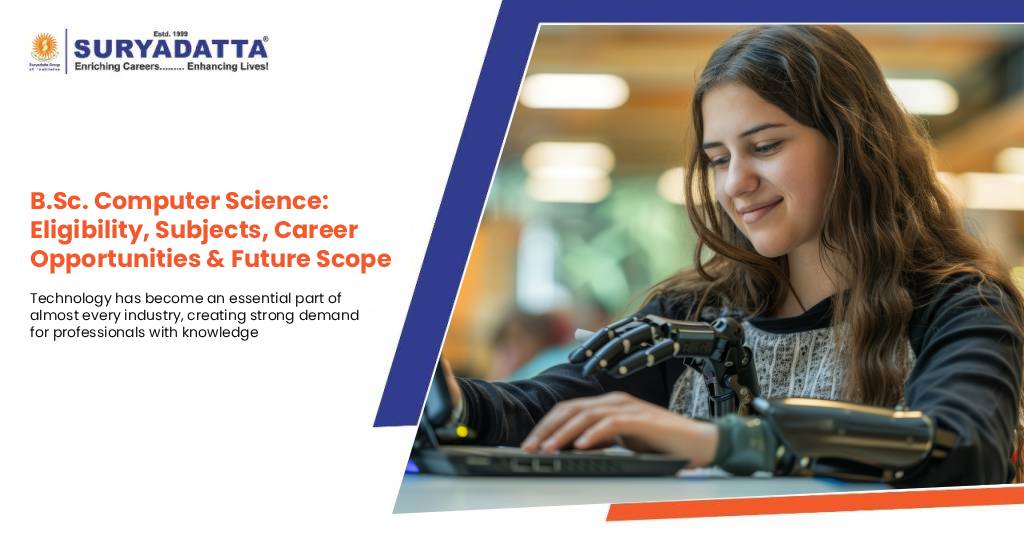
B.Sc. Computer Science: Eligibility, Subjects, Career Opportunities & Future Scope
B.Sc. Computer Science: Eligibility, Subjects, Career Opportunities & Future Scope Technology has become an essential part of almost every industry, creating strong demand for professionals with knowledge of computer science, programming and digital technologies. B.Sc. Computer Science is a popular undergraduate programme for students who are interested in computers, software, programming, data and emerging technologies. The programme provides students with a foundation in computer science concepts while developing programming, analytical, logical and problem-solving skills. With the growth of Artificial Intelligence, Cloud Computing, Cybersecurity, Data Science and Software Development, Computer Science graduates can explore diverse career opportunities in the rapidly changing technology sector. What is B.Sc. Computer Science? B.Sc. Computer Science is an undergraduate degree programme focused on the study of computers, software, programming languages, algorithms, databases, operating systems and other areas of information technology. The course helps students understand how computer systems work and how software applications can be designed and developed to solve real-world problems. It is suitable for students who enjoy technology, logical thinking, programming and learning about new digital solutions. Why Choose B.Sc. Computer Science? B.Sc. Computer Science can provide students with a strong foundation for building a career in the IT industry. Key benefits include Strong foundation in computer science and programming Development of logical and analytical thinking Exposure to software and application development Knowledge of databases and computer networks Introduction to modern technologies Practical project-based learning opportunities Preparation for IT and software-related careers Foundation for postgraduate studies and professional certifications B.Sc. Computer Science Eligibility Eligibility requirements can vary depending on the university, college and applicable admission regulations. Students should always check the latest official admission notification before applying. Generally, students who have completed 12th standard/Higher Secondary education with the required subjects and minimum qualifying marks may be eligible, subject to the applicable rules of the institution and university. Students should verify the current eligibility criteria, admission process and required documents from the official Suryadatta admission information before submitting an application. What Students Learn in B.Sc. Computer Science The curriculum generally introduces students to fundamental and advanced areas of computer science. Depending on the curriculum, students may study: Programming Fundamentals Data Structures Object-Oriented Programming Database Management Systems Operating Systems Computer Networks Web Technologies Software Engineering Computer Architecture Algorithms Data Management Information Security Artificial Intelligence Fundamentals Data Science Fundamentals Mobile and Application Development Project Development The combination of theoretical concepts and practical learning can help students understand how technology is used to create software, applications and digital solutions. Important Skills for Computer Science Students A successful technology career requires more than a degree. Students should continuously develop practical and professional skills. Programming Skills Learning programming languages and understanding programming logic is important for software and application development. Problem-Solving Skills Computer science professionals frequently solve technical and business problems. Logical thinking and analytical skills are therefore highly valuable. Database Skills Knowledge of databases and SQL can help students prepare for software development, data management and database-related roles. Web Development Understanding front-end and back-end technologies can provide opportunities in website and web application development. Communication Skills Technical professionals need to communicate effectively with team members, clients and other stakeholders. Emerging Technology Skills Students can also explore areas such as AI, Machine Learning, Cloud Computing, Cybersecurity and Data Analytics to stay aligned with industry trends. Career Opportunities After B.Sc. Computer Science After completing B.Sc. Computer Science, graduates can explore opportunities across software companies, IT services, startups, financial services, healthcare, education, e-commerce and other technology-driven organizations. Possible career roles include Software Developer Web Developer Application Developer Front-End Developer Back-End Developer Full Stack Developer Software Tester Database Administrator System Administrator IT Support Executive Data Analyst Technical Support Engineer Junior Cybersecurity Professional Actual job opportunities and salary levels depend on skills, experience, specialization, location, employer and industry requirements. Scope of B.Sc. Computer Science The scope of Computer Science continues to expand as organizations increasingly depend on digital technologies. Computer Science graduates can explore opportunities in sectors such as Information Technology Banking and Finance Healthcare E-commerce Education Technology Manufacturing Telecommunications Consulting Software Product Companies Startups Digital Services The increasing use of AI, automation, cloud platforms and data-driven decision-making is creating additional opportunities for technology professionals. Higher Studies After B.Sc. Computer Science Students who want to continue their education after graduation can consider postgraduate programmes and professional certifications according to their career goals. Possible pathways may include M.Sc. Computer Science MCA M.Sc. Data Science M.Sc. Artificial Intelligence MBA in IT or related areas Cybersecurity certifications Cloud Computing certifications Data Analytics certifications Students should select their next qualification based on their interests, academic background and long-term career objectives. Future Scope of Computer Science The future of Computer Science is closely connected with rapidly developing technologies such as Artificial Intelligence, Machine Learning, Cloud Computing, Cybersecurity, Data Science, Internet of Things and Automation. Businesses across industries are adopting digital platforms and intelligent systems to improve productivity and customer experience. This creates a continuing need for professionals who understand software, data and technology. Students who combine their academic knowledge with coding practice, projects, internships, certifications and industry-oriented skills can improve their readiness for technology careers. Why Choose Suryadatta for Computer Science Education? Suryadatta Group of Institutes focuses on academic development, skill enhancement and overall professional growth. Students interested in Computer Science can explore the programme details, curriculum, learning environment, infrastructure, faculty and career-support initiatives available through the relevant Suryadatta institution. A strong learning environment combined with practical exposure, projects and continuous skill development can help students prepare for the evolving requirements of the technology industry. Conclusion B.Sc. Computer Science is an excellent undergraduate pathway for students who are interested in programming, software, computers and emerging technologies. The programme can provide a strong foundation for careers in software development, web development, databases, data analytics, IT support and other technology domains. With continuous learning and practical skill development, graduates can further specialize in areas such as Artificial Intelligence, Data Science, Cloud Computing, Cybersecurity and Software Engineering. For students planning to build a career in the technology sector, choosing the right